Mainkan Classic Nonogram
Loading Game...
Classic Nonogram
Tentang Game Ini
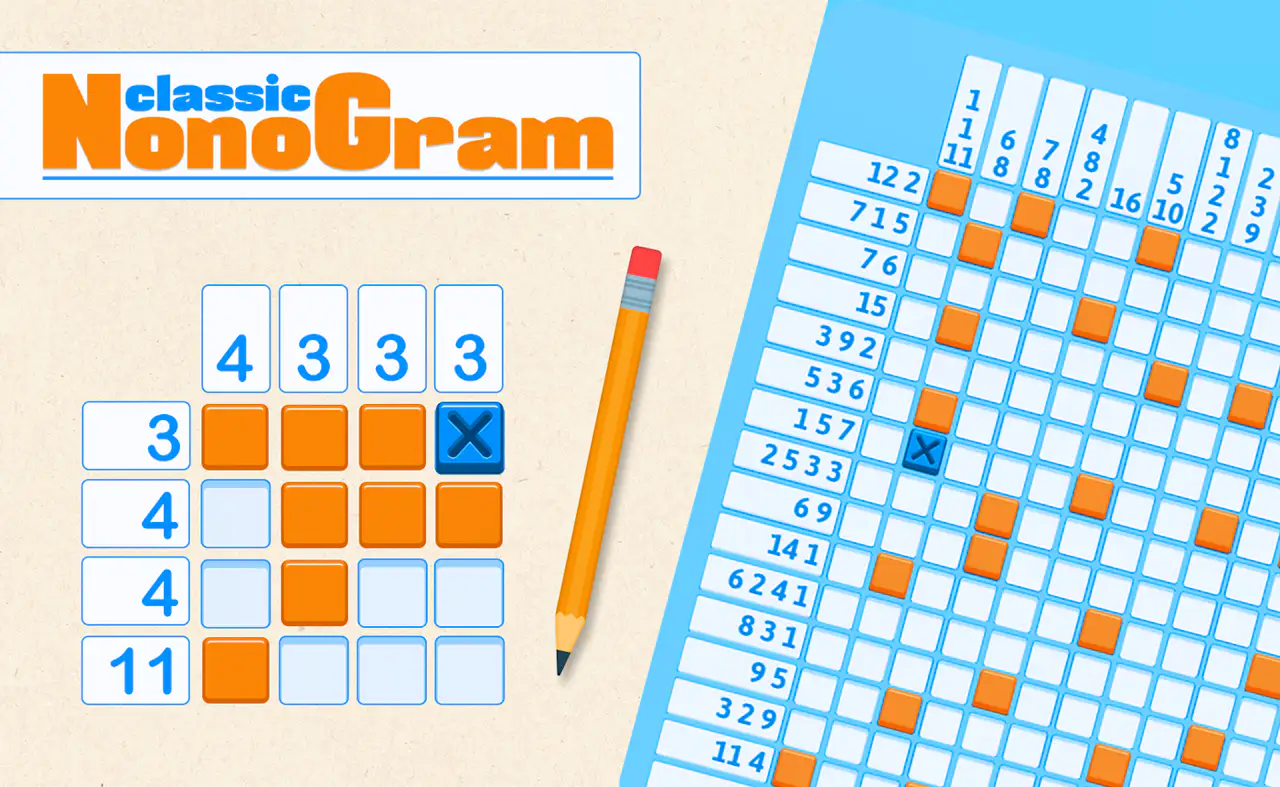
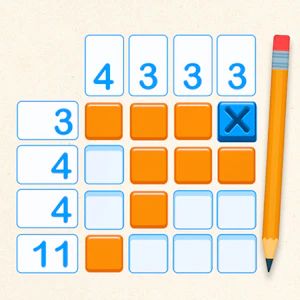
Sharpen your pencil (or your finger) and dive into the world of logic with Classic Nonogram, the ultimate browser-based puzzle game that provides a true mental workout. For those new to the genre, a Nonogram (also known as Picross, Griddlers, or Hanjie) is a picture logic puzzle in which cells in a grid must be colored or left blank according to numbers at the side of the grid to reveal a hidden picture. Classic Nonogram executes this concept flawlessly. You are presented with a grid and a set of numerical clues for each row and column. Your goal is to use pure deductive reasoning to figure out which squares are filled and which are empty. The game starts you off with simple 5x5 grids that are perfect for beginners to learn the fundamentals of 'cross-referencing' rows and columns to lock in squares. As you progress, the puzzles become massive and incredibly complex, spanning up to 15x15 grids that require deep logic and concentration to solve. A unique and high-stakes twist in this version is the three-life system. Every time you make an incorrect guess and place a block in the wrong spot, you lose a life. Lose all three, and the level is over. This pushes you away from guessing and forces you to rely on careful, logical deduction. With a whopping 288 levels, Classic Nonogram offers an immense amount of content for puzzle enthusiasts. Its clean, minimalist interface makes the puzzles the star, allowing you to focus on the satisfying click of filling in a correct block and the gradual reveal of the hidden pixel art.
Why is it so fun? It's the pure, unadulterated satisfaction of logic. The 'click' in your brain when a single number suddenly gives you the solution to a whole row is incredibly rewarding. The life system adds a layer of tension that is missing from many other puzzle games. It makes every move feel important. The 'Aha!' moment of revealing the final picture is a powerful and repeatable reward.
Tips to Win:
- Start with the Obvious: Look for rows or columns that are completely full (e.g., a clue of '5' on a 5-long row) or completely empty (clue of '0'). Fill those first.
- Use X's for Blanks: Don't just mark the filled squares. Actively mark the squares you know are empty. This is just as important for solving the adjacent rows.
- Cross-Reference Constantly: A single filled square in a column tells you information about that row, and vice versa. Always look for how a filled square in one axis constrains the other axis.